
A digital marketing course is only as useful as the channels it teaches in depth and the work it makes you actually produce. This guide walks through the four things worth checking before you pay, so you are judging the curriculum rather than the sales page.
Channel Depth Over Channel Count
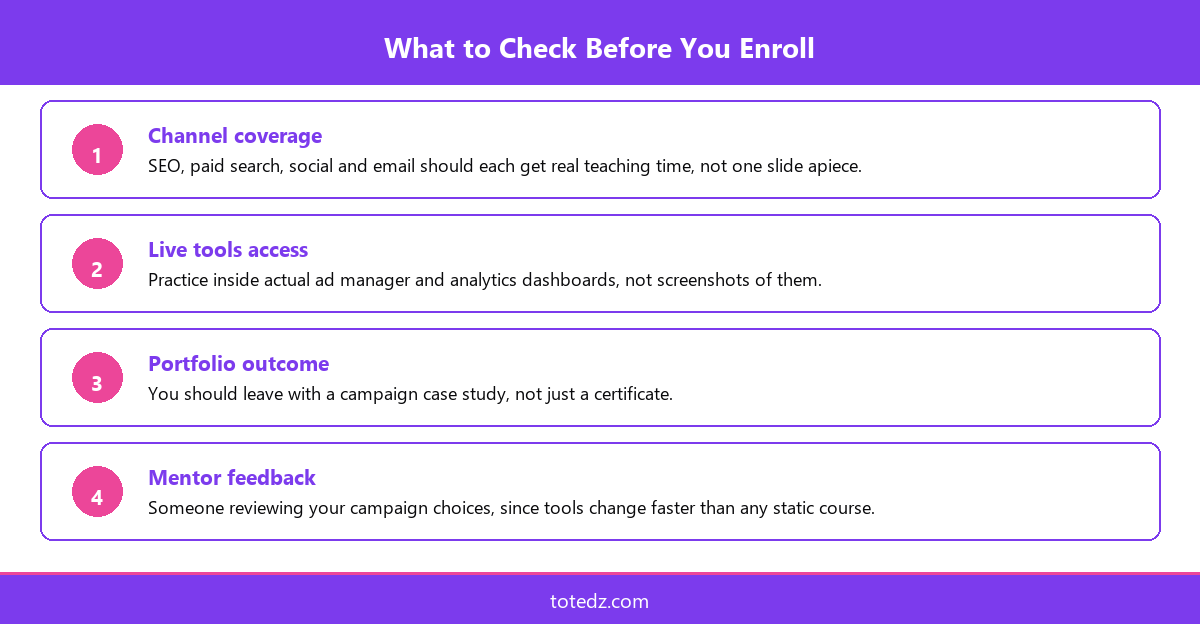
A course that promises SEO, paid ads, social, email and influencer marketing in six weeks is teaching vocabulary, not skill. Real competence in even one paid channel takes sustained, repeated practice. Look for a syllabus that dedicates real weeks, not slides, to search and social advertising specifically.
Live Tool Access Beats Screenshots
Reading about an ads dashboard is not the same as running a real campaign inside one. A course worth its fee gives you hands on time in an actual ad manager and analytics account, even a small test budget, rather than static screenshots explained in a video.
Reference points from Google's own certification curriculum and HubSpot's free training modules are useful benchmarks for how much practical, tool based teaching a serious marketing curriculum should include, even if you enroll through a different academy entirely.
A Portfolio Outcome, Not Just a Certificate
The strongest signal a marketing course can produce is a documented campaign case study you can show in an interview: the objective, the channels used, the budget, and the results, good or bad. A certificate alone answers only one question, whether you finished; a case study answers the far more important one, whether you can actually do the job. Compare this directly against how far a certification alone can take you before deciding a badge is sufficient on its own.
Mentor Feedback Matters More Here Than in Most Fields
Marketing platforms change their interfaces, algorithms and best practices constantly, often faster than any pre recorded course can update. A mentor who is actively working in the field can flag what has changed since the course was filmed, which a static video cannot do for itself. This is also where a background in reading campaign data with more analytical rigor starts to pay off, since marketers who can interpret their own numbers correct course faster than those relying entirely on a mentor's review.
A Totedz counselor can point you toward listed academies where mentor access is genuinely active rather than nominal.
How to Read a Curriculum Before You Ask for a Sales Call
Most marketing course pages lead with outcomes and testimonials rather than a week by week syllabus. Ask directly for the module breakdown before booking any sales call, and check for two specific things: how many hours are allocated to hands on tool practice versus lecture, and how mentor review sessions are actually scheduled rather than promised in general terms. A vague answer to either question is itself useful information.
Kerala and India Hiring Context
Marketing hiring across Kerala's growing services and startup sector increasingly favors candidates who can show channel specific results over generalists with broad but shallow exposure. A candidate who can point to one well run paid search campaign case study often outperforms one who lists ten channels on a resume.
Red Flags Worth Walking Away From
A few patterns show up repeatedly across weak marketing programs: guaranteed placement language with no conditions attached, and reviews that all read as though they were written by the same person. Either pattern alone is a reason to keep comparing.
If marketing turns out to be the wrong fit, the starting point for AI and data skills walks through a more technical adjacent track, and a counselor can help you compare the two before you commit.
How a Totedz Counselor Helps You Decide
Comparing marketing course syllabi in the abstract is hard even for people already working in the field. A counselor reviews the specific academies listed in the marketplace and matches that against your target role, which is difficult to judge from a landing page alone.
Book a mentorship consultation or reach out directly if you already have two or three specific programs in mind and want a second opinion before committing.
Frequently Asked Questions
How many channels should a beginner marketing course actually cover?
Two, taught well, beats five taught superficially. Depth in search and social advertising alone is enough to start applying for entry level roles.
Is a marketing course without live campaign practice worth taking?
Only as a low cost introduction to terminology. Treat it as step one, not a complete program, and plan for hands on practice separately.
How much should a solid digital marketing program cost in India?
Pricing varies widely by academy and format, which is exactly why comparing on curriculum depth rather than price alone matters more than chasing the cheapest listing.
Can I switch specializations partway through a marketing course?
Some academies allow it, others do not. Confirm this before enrolling if you are still deciding between, for example, paid search and social media management.
Conclusion
For the wider picture across marketing, development and design tracks, see the complete course selection guide this article belongs to.
Channel depth, live tool access, a portfolio outcome and active mentor feedback are the four things that separate a marketing program worth paying for from one that only looks impressive on a landing page. If you would rather have someone check a specific listing against these four points, a Totedz counselor can do that in a single conversation.