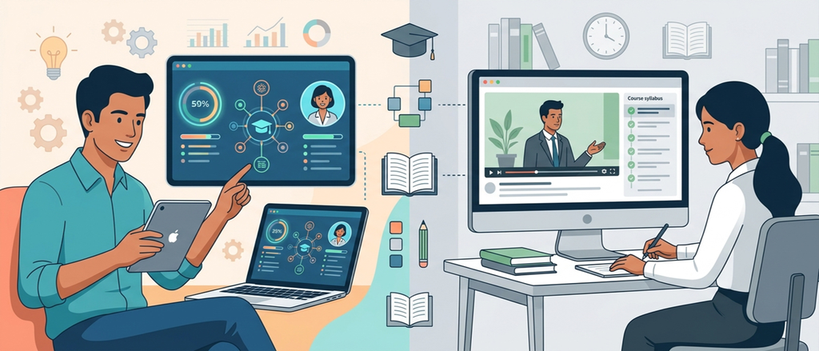
Learn New Skills Online the Smart Way
Learn new skills online without burning hours on the wrong courses. That is the challenge most students and working professionals face today. The internet is full of options, but more choices often lead to more confusion. You end up switching between platforms, starting courses you never finish, and wondering if any of it is actually helping your career. This blog will walk you through a focused, practical approach to online learning so every hour you invest counts.
Key Takeaways
- Choosing the right upskilling courses starts with identifying your career goal first, not browsing courses at random.
- Structured platforms and guided discovery tools help you learn new skills online without losing direction or momentum.
- Working with an educational counselor can dramatically reduce time wasted on mismatched programmes.
Why Most People Waste Time When Learning Online
The biggest mistake people make when they decide to learn new skills online is starting without a clear destination. They search for a trending course, sign up impulsively, lose interest halfway, and then repeat the cycle. This pattern is extremely common, especially among students aged 18 to 35 who are exploring career options for the first time.
According to research published by the OECD, learner dropout rates in online courses remain high globally, largely because learners lack structured guidance and clear learning goals. Without a plan, even the best course becomes just another tab you open and forget.
The solution is not to find more willpower. It is to make smarter choices before you even click enrol.
Step One: Define Your Skill Goal Before You Learn New Skills Online
Clarity before commitment is the golden rule of smart online learning. Before you search for any upskilling courses, spend time answering one simple question: what specific outcome do I want from this skill?
For example, do you want to get a promotion, switch careers, start a freelance side income, or build a portfolio? Each of these goals points to a different type of course. A graphic design certificate for freelancing is very different from a management programme for a corporate promotion. Getting this clarity upfront saves you weeks of aimless browsing and incomplete enrolments.
You can explore a wide range of courses listed on Totedz to match your learning goals with programmes that real institutes and academies offer across India.
How to Learn New Skills Online at Every Career Stage
If you are a fresh graduate, focus on skills that make you employable quickly in your chosen field. If you are a working professional, look for skills that complement what you already do or open a lateral career path. Online skill development for career growth works best when the skill you are learning is directly applicable to your current or desired role.
Talk to people already working in your target role. Look at job descriptions. Notice which skills appear repeatedly. That research takes an afternoon and saves you months of misdirected effort.
Step Two: Choose the Best Upskilling Courses Through Structured Discovery
Random browsing is the enemy of productive online learning. When you search for a course on your own without a structured discovery process, you are often influenced by ratings, price, and marketing rather than actual fit. Best online courses for upskilling in India are not always the most popular ones. They are the ones aligned with your specific goal and learning style.
This is exactly why guided learning discovery platforms exist. Platforms like Totedz connect students with educational counselors who help match learners to the right programmes. Instead of spending hours comparing courses, you get personalised guidance that shortens your decision-making process significantly.
According to the World Economic Forum, guided learning environments improve course completion rates and skill retention compared to purely self-directed approaches. That insight alone should change how you approach your next enrolment decision.
What Makes an Upskilling Course Worth Your Time
Not every course listed online delivers equal value. When evaluating any programme, ask these questions before enrolling.
- Is the course offered by a recognised institute or academy?
- Does it include practical assignments or projects, not just video lectures?
- Is there a certificate or credential recognised by employers?
- Does the course structure fit your available time per week?
- Can you access support or mentorship if you get stuck?
Answering yes to most of these signals a course worth your time. Anything that falls short on multiple points is likely to result in incomplete learning and wasted effort.
Step Three: Build a Learning Routine That Sticks
Consistency is what separates people who learn new skills online successfully from those who collect certificates without real knowledge. You do not need to study for four hours a day. You need a reliable daily habit, even if it is just thirty minutes.
Research in behavioural psychology consistently shows that habits formed around existing routines are more likely to persist. Attach your study time to something you already do every day, such as right after breakfast or during your lunch break. This technique, called habit stacking, dramatically increases the chance you will follow through.
Also, track your progress weekly. Celebrate small wins. Completing a module is progress. Finishing an assignment is progress. Recognising momentum keeps motivation alive, especially during longer programmes.
Tips to Learn New Skills Online While Working Full-Time
Working professionals face a unique challenge: time is genuinely scarce. Here are practical strategies to upskill while working full-time without burning out.
- Block two or three study sessions per week in your calendar as non-negotiable appointments.
- Choose courses with self-paced formats so you can learn at your own speed.
- Focus on one skill at a time. Trying to learn three things simultaneously usually means mastering none.
- Apply what you learn at work immediately. Real-world application accelerates retention faster than re-watching lecture videos.
- Connect with others taking the same course. Peer accountability increases completion rates significantly.
Step Four: Get Guidance From an Educational Counselor
One of the most underrated strategies to learn new skills online efficiently is working with a dedicated educational counselor. Most learners skip this step entirely and try to navigate course selection alone. That is a costly mistake in terms of both time and money.
An educational counselor understands the landscape of available programmes, knows what employers are currently looking for, and can help you avoid costly enrolment mistakes. They bridge the gap between your current situation and the right learning pathway.
At Totedz, educational counselors are a core part of the student experience. They do not just hand you a list of courses. They take time to understand your background, your goals, and your constraints before making a recommendation. If you want to explore how this guided approach works, you can create your account on Totedz and connect with a counselor who can help you make a confident enrolment decision.
Step Five: Track Progress and Adjust as You Go
Smart learners treat online education like a project. They set milestones, check in on progress, and adjust the plan when something is not working. If you are three weeks into a course and realise it is not delivering what you expected, that is valuable information. It is not failure. It is data.
Review your learning plan every month. Ask yourself whether the skill you are developing is still aligned with your goal. Career paths shift. Industry demand changes. Being flexible and willing to adjust keeps your learning relevant rather than purely academic.
How to choose the right online course in India is not a one-time decision. It is an ongoing process of evaluation, adjustment, and commitment to continuous growth.
Conclusion
Learning new skills online does not have to be a time-consuming, frustrating cycle of half-finished courses and misplaced effort. The smart approach starts with a clear goal, moves through structured discovery, builds on consistent daily habits, and is supported by expert guidance when needed. Every step you take with intention brings you closer to genuine growth. If you are ready to explore upskilling courses that are matched to your career goals, reach out to the team at Totedz or browse available programmes today. Your time is valuable. Spend it learning the right things, the right way.
FAQ
Q1: How do I know which skill is worth learning online right now?
Answer: Start by researching job descriptions in your target role. Skills that appear frequently across multiple listings are in demand. Platforms focused on upskilling courses in India can also show you which programmes are actively sought by students and employers alike.
Q2: How long does it take to learn a new skill online?
Answer: It depends on the skill and your daily commitment. Most foundational online courses can be completed in four to twelve weeks with consistent effort. Focused daily practice of thirty to sixty minutes is often more effective than marathon study sessions on weekends.
Q3: Can I learn new skills online while working a full-time job?
Answer: Yes, absolutely. Self-paced courses are specifically designed for working professionals. The key is selecting programmes that fit your schedule and focusing on one skill at a time rather than enroling in multiple courses simultaneously, which often leads to incomplete learning.
Q4: What types of upskilling courses are popular among Indian learners?
Answer: Indian learners commonly pursue courses in technology, business management, digital marketing, data analytics, and creative design. The specific programmes available vary by platform. Browsing an active course discovery platform gives you a real-time view of what institutes are currently offering.
Q5: How do educational counselors help students choose the right course?
Answer: Educational counselors assess your background, career goals, and learning preferences before recommending programmes. This personalised approach saves time and reduces the risk of enrolling in a course that does not align with your actual needs or professional direction.
Q6: Is online learning as effective as attending a physical class?
Answer: Research consistently shows that online learning can be equally or more effective than traditional classroom formats when learners are engaged and supported. Structured guidance, practical assignments, and regular feedback are key factors that determine how much you actually retain and apply.
Q7: What should I look for in a good online course?
Answer: Look for courses that include practical projects, recognised credentials, clear learning outcomes, and access to instructor support. Courses offered by verified institutes or academies tend to deliver stronger results than informal video series without structured assessment or completion milestones.
Q8: How can I stay motivated while learning online on my own?
Answer: Set specific weekly goals and track your progress. Join study communities or find a peer also taking the same course. Applying what you learn at work immediately reinforces motivation. Working with a counselor who checks in on your progress also helps maintain accountability over time.
Q9: Are there upskilling options available for people with no prior experience in a field?
Answer: Yes. Many beginner-level programmes are designed for complete newcomers and build foundational knowledge step by step. If you are unsure where to begin, understanding how Totedz matches students to the right programmes can help you start your learning journey with confidence.
Q10: How do I avoid wasting money on the wrong online courses?
Answer: Research the course provider, read learner reviews, and clarify what outcomes the programme delivers before paying. Getting advice from an educational counselor before enrolling significantly reduces the chance of selecting a course that does not serve your actual career or learning goals.